

Knowing the difference matters more than most people realize, since the two injuries can feel remarkably similar in the moments right after they happen, even though they call for very different treatment approaches and recovery timelines.
Broken Wrist vs Sprained Wrist

A sprained wrist happens when a ligament in the wrist becomes injured. Ligaments are bands of connective tissue that stretch from bone to bone, and wrist sprains usually involve a torn ligament or one that has been significantly overstretched during a fall or sudden twisting motion.
A broken wrist happens when you fracture one of the bones that make up the joint itself. The wrist contains 13 different bones that can break during an injury, and even the smallest fracture can cause considerable pain.
Because so many small bones work together in this one area, a fracture in one location can sometimes affect movement and stability throughout the entire wrist, not just the specific spot where the break occurred, which is part of why proper imaging matters.
Why the Distinction Matters for Treatment
Telling the two apart matters because sprains and fractures are treated quite differently. A sprain generally heals with rest and support, while a fracture often needs imaging and, in some cases, a cast or splint to heal correctly.
Attempting to treat a fracture like a simple sprain can allow the bone to heal improperly, sometimes requiring a more invasive correction later on. This is part of why a proper evaluation matters so much, even when the injury initially seems mild, since the two conditions can look deceptively similar at first glance.
Symptoms of a Broken Wrist
A broken wrist tends to come with a distinct set of warning signs that separate it from a simple sprain. A visibly crooked wrist is one of the clearest indicators, along with swelling that develops around the injured area, often within minutes of the injury happening.
In more severe cases, a bone may actually protrude through the skin, which always warrants immediate medical attention rather than a wait and see approach at home.
Intense, sharp, stabbing pain, along with tenderness and bruising, rounds out the most common symptoms people notice right after the injury occurs. Understanding when broken bones need ER care can help clarify whether your specific symptoms point toward a fracture that needs same day evaluation.
A Quick Self Check Before Seeking Care
While nothing replaces a professional exam, a few quick observations can help you decide how urgently to seek care. Try gently pressing on different areas of the wrist to see if pain is localized to one specific spot, which often points toward a fracture rather than a broader sprain affecting the whole joint.
Attempting small, careful movements, like slightly rotating or flexing the wrist, can also offer a clue, though any movement that produces sharp, severe pain should be stopped immediately rather than pushed through.
These self checks are never a substitute for a real medical evaluation, but they can help you gauge how urgently you should seek care.
Understanding when a sprain needs ER care can help you recognize similar red flags in the wrist, since sprains and fractures in different joints often share overlapping warning signs.
How Sprains Present Differently
A sprained wrist tends to feel different from a fracture in a few key ways. The pain from a sprain often feels more like a dull ache or soreness that intensifies with movement, rather than the sharp, stabbing sensation typically associated with a break.
Swelling and bruising can occur with both injuries, which is exactly why they get confused so often. A sprain, however, rarely produces the visible deformity or crooked appearance that usually points toward a fracture instead.
When a Sprain Still Needs Professional Evaluation
Even a wrist injury that seems like a straightforward sprain is worth having evaluated if the pain does not improve within a few days of consistent RICE treatment.
Persistent swelling, ongoing difficulty gripping objects, or a wrist that continues to feel unstable during normal movement are all signs the injury may be more serious than it initially appeared.
A proper exam, sometimes including an X ray, can rule out a hidden fracture that might not have been obvious right after the injury happened. This is especially worth considering if the pain seems to worsen over time rather than gradually improving as expected.
How Common Are Wrist Fractures and Sprains
Wrist injuries are more common than most people realize, especially among children and older adults, though the specific patterns of risk differ quite a bit between these two age groups.

About 25 percent of fractures seen in children by a pediatrician turn out to be wrist fractures, while 18 percent of fractures among elderly patients involve a broken wrist specifically, a pattern that reflects how bone density and injury risk change across a person’s lifetime.

Who Is Most at Risk
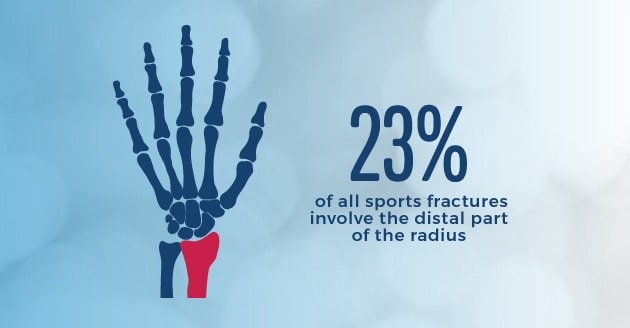
The risk of breaking a wrist is higher in boys, at 42 percent, compared to girls, at 27 percent. Sports related fractures also show a clear pattern, with 23 percent of all sports fractures involving the distal portion of the radius, one of the two bones that make up the forearm near the wrist.
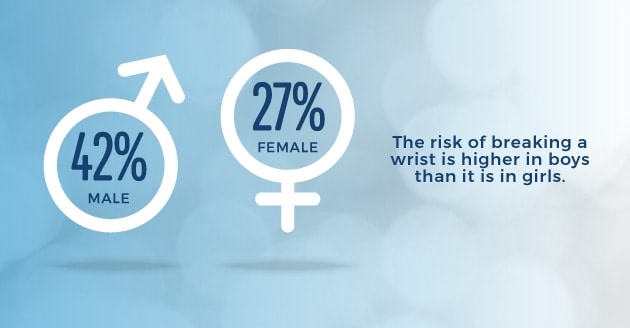
This higher rate among boys and in sports settings often comes down to a combination of activity level and the kinds of falls that tend to happen during contact sports or rough play, where the wrist frequently takes the brunt of impact when someone falls forward onto an outstretched hand.
Treatment for a Sprained Wrist
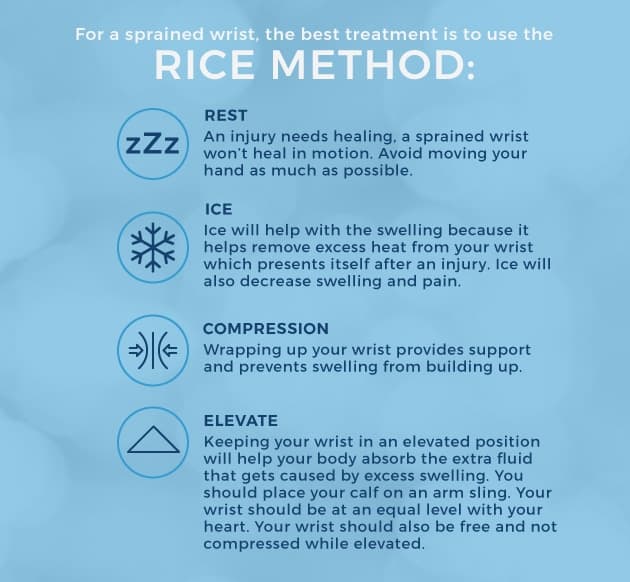
For a sprained wrist, the RICE method remains the most effective approach, and each step plays a distinct, complementary role in supporting recovery over the following days and weeks.
Rest matters first, since an injury needs time to heal and will not improve while still in motion, so avoiding unnecessary hand movement is important early on, even for everyday tasks that feel small.
Ice, Compression, and Elevation
Ice helps manage the swelling that follows an injury by removing excess heat from the area, which also helps reduce both swelling and pain, especially when applied within the first day or two after the injury occurs.
Compression, achieved by wrapping the wrist, provides support and helps prevent swelling from building up further. Care should be taken not to wrap too tightly, since excessive pressure can restrict blood flow rather than support healing.
Elevation allows your body to absorb the extra fluid that swelling produces, and keeping the wrist at roughly the same level as your heart, supported by a sling if needed, makes this more effective. The wrist should remain free rather than tightly compressed while elevated, since too much pressure can interfere with proper healing.
Sticking with this routine consistently over the first few days after the injury tends to produce noticeably better results than applying it only occasionally.
How Long Does It Take for a Broken Wrist to Recover
Healing time depends heavily on a person’s overall health and how well they follow their treatment plan. On average, a broken wrist takes about six weeks to heal properly, though this timeline can shift depending on the severity of the fracture and the patient’s age.
Factors That Affect Healing Time
Younger patients and those in generally good health often heal somewhat faster than older adults or people managing chronic conditions like osteoporosis, which can slow down the bone rebuilding process considerably.
The specific bone involved also plays a role, since some of the smaller wrist bones have a more limited blood supply and can take longer to heal fully even after a cast comes off.
Following every direction given by your healthcare provider matters throughout this recovery window, since skipping steps or returning to normal activity too early can lead to complications that extend the healing process considerably.
Why Village Emergency Center Is Ready to Treat Wrist Injuries
Now that you have a clearer sense of how to tell a broken wrist from a sprained one, getting the right care matters just as much as the diagnosis itself. Village Emergency Center is open 24 hours a day, every day of the year, with board certified physicians and onsite imaging ready to determine exactly what you are dealing with.
Families in League City and Clear Creek trust us just as much as those near our Jersey Village location, where our team is ready to provide the quality care your wrist injury deserves, from initial imaging through a full treatment plan, since Village Emergency Center is here around the clock whenever you need us.