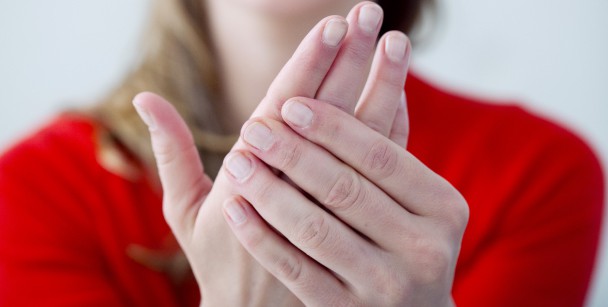
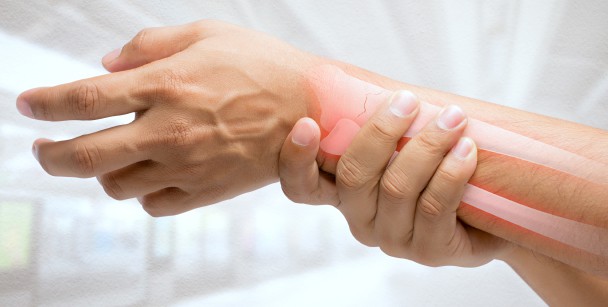
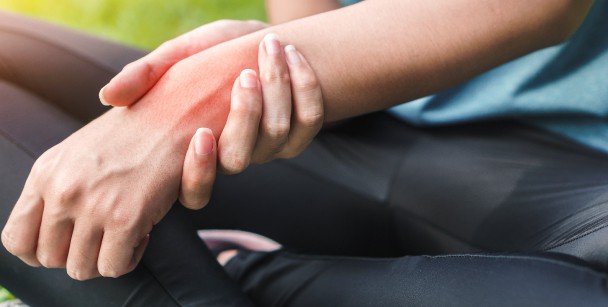
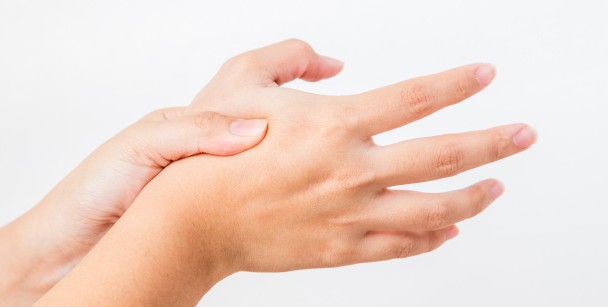
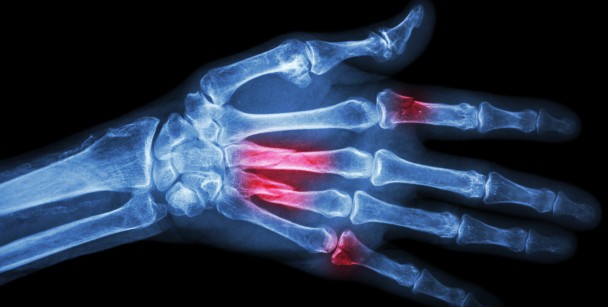
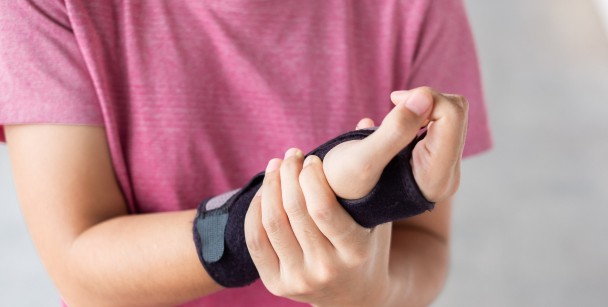
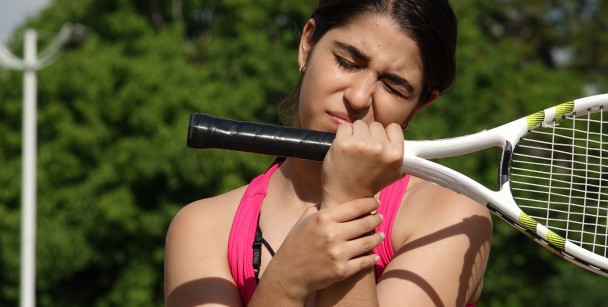
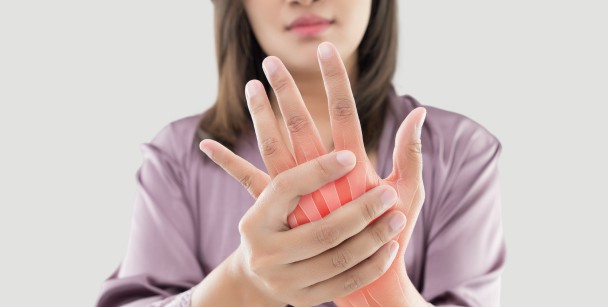
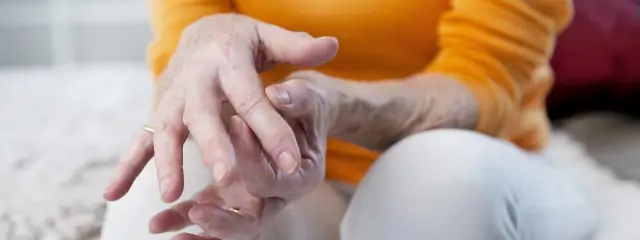
Hand and wrist injuries are so common that they deserve a complete rundown of what can go wrong and how to respond. While most are treatable, taking the proper steps early on matters, since complications like lasting deformities can sometimes lead to permanent disability if an injury goes unaddressed.
The hand and wrist contain an intricate network of small bones, tendons, and ligaments working together, which is part of why even a seemingly minor injury in this area can affect your grip strength and range of motion for weeks afterward, longer than many people expect.
Common Finger Injuries
Several distinct injuries can affect the fingers, each with its own distinct cause, symptoms, and warning signs worth learning to recognize.
1. Jammed Finger and Finger Fracture
A jammed finger happens when you strike the end of a fully extended finger, leading to pain, a swollen joint, difficulty bending, and joint tenderness. Both injuries can look similar at first glance, which is why proper evaluation matters.
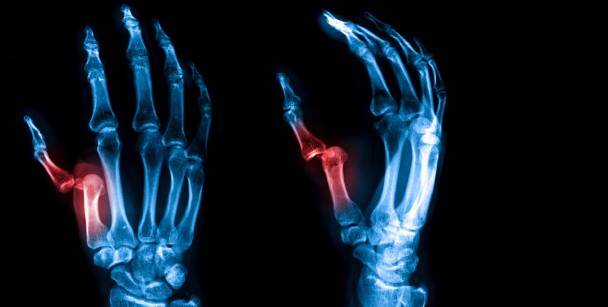
A finger fracture, by contrast, is a true bone break caused by direct force of contact, and it typically brings pain, tenderness directly over the fractured bone, and sometimes a visible deformity.
2. Mallet Finger and Nail Bed Injuries
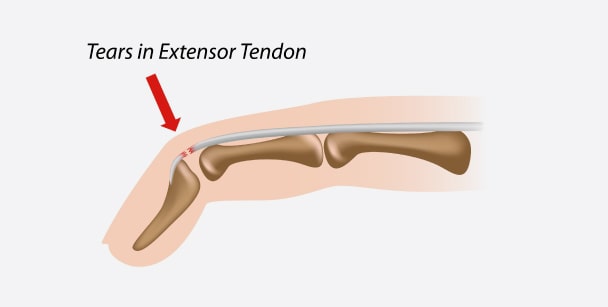
A mallet finger occurs when force to the fingertip ruptures the tendon that normally keeps the finger held straight, leaving you unable to hold the fingertip in position along with tenderness behind the nail.
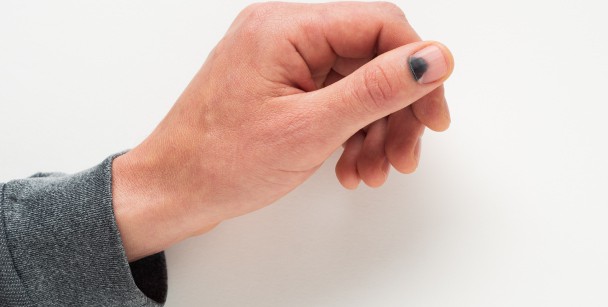
A nail bed injury happens when a forceful impact crushes the nail bed itself, often causing blood to pool under the nail along with tenderness from the resulting tear.
3. Finger Dislocation and Jersey Finger
A finger dislocation happens when enough force displaces the joint out of position, with the middle finger being the most commonly affected in this kind of injury.
Jersey finger describes a forceful grasp that ruptures a tendon and leaves you unable to flex the joint at the fingertip, an injury that most often affects the ring finger specifically, commonly seen in athletes grabbing an opponent’s jersey during a tackle.
Common Wrist Injuries
The wrist faces its own set of common injuries, many stemming from falls or repetitive strain placed on the joint over time. These injuries range from sudden fractures to gradually developing ligament damage.
Scaphoid Fracture and Ligament Tears
A scaphoid fracture, the most common wrist bone fracture, typically happens from falling onto an extended hand, causing pain when moving the wrist and tenderness near the base of the thumb.
A wrist ligament tear develops when the wrist twists from an injury or impact, producing localized pain that intensifies when the wrist grips in a twisting motion. Understanding ligament healing timelines can help set realistic expectations for recovery from this type of injury, since ligament damage often takes longer to heal than a simple sprain.
Skier’s Thumb
Ulnar collateral ligament tear, more commonly known as skier’s thumb, happens when a torn ligament leaves the thumb stable only while actively grasping with the hand. This injury makes gripping objects genuinely painful and often requires targeted treatment to heal correctly.
Despite the name, this injury is not limited to skiers. Anyone who falls while holding onto something firmly, such as a ski pole or a set of car keys, can sustain the same kind of ligament tear during an awkward fall.
Overuse Injuries of the Hand and Wrist
Beyond sudden trauma, repetitive strain accounts for a significant share of hand and wrist injuries seen in both athletes and laborers alike.
Tendonitis and Stress Fractures
Tendonitis develops when tendons become inflamed from doing the same movement over and over, producing tenderness whenever the area is in motion.
Stress fractures happen when repeated activity gradually fractures a bone, typically causing pain specifically tied to movement rather than at rest, which can make them easy to overlook until the pain becomes persistent.
Growth Plate Stress and DeQuervain’s Conditions
Growth plate stress occurs when a still developing bone becomes overstressed from overuse, a pattern most common in young gymnasts and baseball players. DeQuervain’s syndrome results from repetitive wrist rotation and gripping, occurring most often in tennis and badminton players.
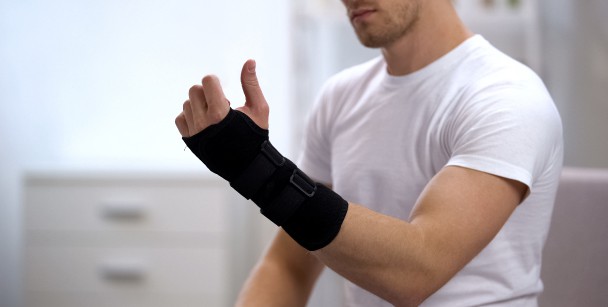
DeQuervain’s tenosynovitis involves the tendons themselves becoming irritated and swollen to the point that movement becomes genuinely difficult, sometimes requiring a brace or splint to allow proper healing.
Boutonnière Deformity
A boutonnière deformity happens when the tendon on the top of the finger, which attaches to the middle bone, becomes injured. This leaves the finger bent in a way it can no longer straighten on its own without treatment.
Without proper treatment, this deformity can become permanent over time, since the tendon imbalance gradually pulls the finger into a fixed position. Early splinting often prevents this outcome when the injury is caught soon after it happens.
What Are the Most Common Hand and Wrist Injuries in Sports
Athletes and laborers both experience these injuries, though the underlying cause often differs. Traumatic injuries in athletes usually stem from accidents during play, while laborers more often develop chronic injuries from repeatedly using their hands to perform the same tasks day after day.
Dislocations are common in both groups, alongside sprains, broken bones, torn ligaments, stress fractures, nerve damage, and swollen tendons. Recognizing which category your injury falls into can help guide how quickly you seek treatment and what kind of care to expect.
Contact sports like football and basketball tend to produce more sudden, traumatic injuries, while sports involving repetitive gripping motions, such as tennis or golf, more often lead to the chronic overuse injuries described earlier.
What to Do if Your Wrist Is Injured
Seeking immediate medical attention matters if you notice any of the following symptoms:
Severe pain or severe swelling
Numbness or gray colored skin
An evident dislocation, where the hand or finger sits in an unnatural position
A clicking noise when moving the finger, wrist, or hand
Nonstop bleeding that will not slow down
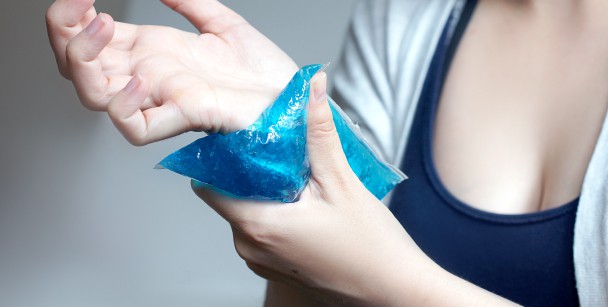
For minor injuries, the RICE method, meaning rest, ice, compression, and elevation, helps manage pain, swelling, and stiffness in the affected limb. Taking ibuprofen can further ease discomfort and reduce inflammation while the injury heals.
Applying ice for short intervals rather than continuously helps avoid skin damage while still reducing swelling effectively. A simple elastic bandage wrapped snugly but not too tightly can provide the compression needed without cutting off circulation to the injured area.
Treatment Options for Hand and Wrist Injuries
Treatment depends on the type, location, and severity of the injury. Your care plan may include:
Diagnostic imaging: If a broken bone is suspected, prompt imaging such as X-rays or other scans can confirm the diagnosis and help determine the most appropriate treatment as quickly as possible.In cases where imaging confirms a fracture, knowing when to go to the ER for a broken bone can help ensure timely treatment and reduce the risk of complications.
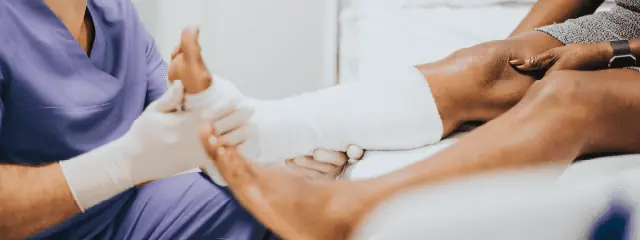
Conservative treatment: Mild sprains, strains, and stable fractures often heal with rest, taping, braces, splints, casts, physical therapy, and gradual rehabilitation.
Surgical treatment: Severe ligament tears, complex fractures, or injuries causing significant instability may require surgery to restore proper function and alignment.
Recovery and rehabilitation: Healing time varies widely, ranging from a few weeks for minor injuries to several months for severe fractures or ligament repairs. Your doctor will consider both immediate healing and long-term mobility when recommending treatment.
How to Prevent a Hand or Wrist Injury
Wearing wrist guards, protective gloves, and stretching before extensive activity are all practical ways to lower your risk of a hand or wrist injury.
If you work a labor intensive job, stretching beforehand might feel unnecessary, but it can genuinely save you from a lot of pain and discomfort down the road, especially over the course of a long career.
Chronic pain can also be reduced by taking regular breaks that let your wrists and hands rest between repetitive or physically demanding tasks throughout the day.
Maintaining proper hand posture and using movements that align with your hands’ natural range of motion can further reduce pain and help you avoid conditions like carpal tunnel syndrome.
Athletes recovering from a sprain elsewhere in the body can also benefit from understanding sprain healing timelines, since similar healing principles often apply across different joints.
Simple Habits That Add Up
Small adjustments like using an ergonomic keyboard, adjusting the height of your desk, or switching hands periodically during repetitive tasks can meaningfully reduce daily strain over time. These changes rarely feel significant in the moment, but they add up considerably across months and years of repeated use.
Why Village Emergency Center Is Ready to Treat Hand and Wrist Injuries
If you are dealing with any of these common hand and wrist injuries, Village Emergency Center is ready to help right away. We offer fast treatment with no wait time at each of our 24 hour locations, closer than your nearest major hospital.
Families in League City and Clear Creek trust us just as much as those near our Jersey Village location, where our team can evaluate your injury right away. Village Emergency Center is ready around the clock whenever a hand or wrist injury leaves you needing answers.
Frequently Ask Questions
Sprains cause pain and swelling without bone tenderness. Fractures often cause point tenderness directly over bone, visible deformity, or inability to grip. X-ray is needed to confirm.
The scaphoid bone in the wrist is frequently broken but missed on initial X-rays. Persistent thumb-side wrist pain after a fall should always be re-evaluated with advanced imaging.
Yes. Crush injuries, deep cuts, or severe fractures near nerves can cause lasting numbness or weakness if not treated promptly. Tingling after a hand injury always warrants medical care.
Buddy-taping works for minor finger sprains or small non-displaced fractures, but only after a doctor confirms it’s appropriate. Improper taping can cause a finger to heal crookedly.
Surgery is needed for displaced fractures, tendon ruptures, nerve lacerations, or injuries that destabilize the joint. Leaving these untreated risks permanent loss of function.
Yes. Conditions like carpal tunnel syndrome and trigger finger develop from overuse and can be as disabling as acute injuries. Early intervention prevents long-term disability.