

Every Parent Has Been There, Here Is How to Know When a Fever Is a Real Emergency
It is 2 AM. Your baby is burning up. You check the thermometer. Your heart races. Is this serious? Should you go to the ER right now? Should you wait until morning and call the pediatrician? Every parent has faced this exact moment, the terrifying uncertainty of a sick child in the middle of the night.
Fever is one of the most common reasons parents bring children to the emergency room. But not every fever is an emergency. And some fevers, particularly in very young infants, are far more dangerous than they appear.
Knowing the difference between a fever your child’s body can handle and one that demands immediate emergency care is one of the most important things a parent can know. This guide gives you a clear, age-specific, symptom-specific framework for making that decision, confidently and correctly every time.
What Is a Fever and What Does It Mean?
A fever is a body temperature elevated above the normal range as a response to infection, illness, or inflammation. Normal body temperature is approximately 98.6°F (37°C), though it varies slightly throughout the day and between individuals.
A fever is not a disease. It is a symptom, and more importantly, it is a defense mechanism. When the immune system detects a threat, a virus, bacteria, or other pathogen, it deliberately raises the body’s temperature. This fever response serves several protective functions:
- Elevated temperatures inhibit the growth and replication of many bacteria and viruses
- Heat accelerates the production and activity of white blood cells
- Fever stimulates the release of proteins that enhance immune coordination
- Elevated temperatures promote the production of antibodies
The fact that your child has a fever is actually evidence that their immune system is working. For most children with most illnesses, the fever itself is not the danger, it is a sign that the body is fighting back. The danger lies in what is causing the fever and how the child is responding to it.u’re able to treat at homewith rest, fluids, and/or easily obtained over-the-counter medications.

Understanding Normal Body Temperature in Children
Before you can identify a fever, you need to know how to measure temperature accurately in children of different ages.
Recommended Temperature Measurement Methods by Age
- Rectal Temperature (Most Accurate for Infants): For babies under 3 months of age, rectal temperature is the gold standard. It provides the most accurate reading and is strongly recommended by pediatricians for newborns and young infants. A rectal temperature at or above 100.4°F (38°C) in a baby under 3 months old is a medical emergency.
- Axillary Temperature (Under the Arm): Less accurate than rectal measurement, typically reads 0.5°F to 1°F lower than actual core temperature. Useful for initial screening but should be confirmed by rectal measurement in young infants if elevated.
- Temporal Artery (Forehead Scanner): Provides fast, reasonably accurate readings for children over 3 months. The accuracy depends significantly on proper technique. These are useful for quick screening but should be followed by rectal measurement in young infants when accuracy is critical.
- Oral Temperature: Reliable for children old enough to hold a thermometer under their tongue without moving, typically around age 4 to 5 and older. Reads slightly lower than core temperature.
- Ear (Tympanic) Temperature: Fairly accurate for children over 6 months when used correctly. Ear canal wax, improper positioning, and ear infections can affect accuracy.
Age-Specific Fever Guidelines: When to Call and When to Go
The appropriate response to a child’s fever depends critically on the child’s age. Younger children, particularly infants under 3 months, have immature immune systems that cannot always contain serious infections effectively. What would be a manageable illness in an older child can become life-threatening in a newborn within hours.
Infants Under 3 Months Old
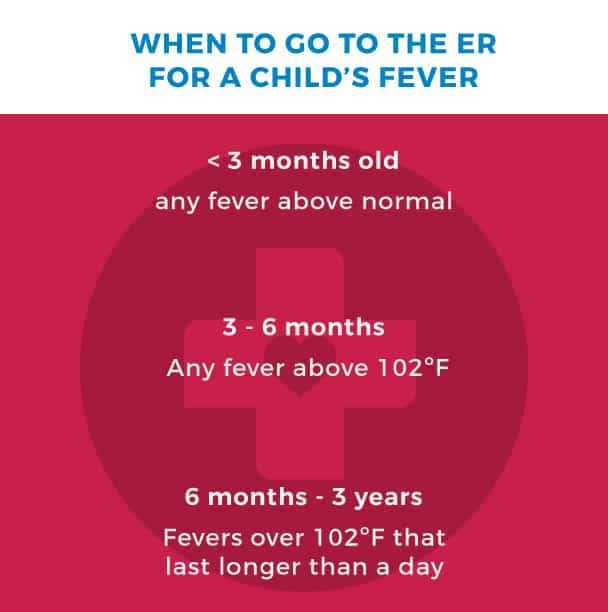
Any rectal fever at or above 100.4°F (38°C) is a medical emergency in a baby under 3 months old. Go to the ER immediately.
This is the most important rule in pediatric fever management. Do not wait. Do not give fever-reducing medication and monitor at home. Do not call the pediatrician and wait for a callback. Go directly to the emergency room.
Why is this age group so different? Newborns and very young infants have not yet developed the immune capacity to contain serious bacterial infections. Conditions like bacterial meningitis, sepsis, and serious urinary tract infections can escalate from apparent wellness to critical deterioration within hours in this age group. Fever is often the only external sign that something is seriously wrong before rapid deterioration occurs.
Additionally, young infants cannot tell you how they feel. They cannot describe pain, stiffness, light sensitivity, or confusion. The fever is the warning system, and it must be taken seriously every single time in this age group.
Infants Between 3 and 6 Months Old
Contact your pediatrician for any fever above 102°F (38.9°C). Seek medical attention for any fever up to 102°F that is paired with other concerning symptoms.
At this age, the immune system is more developed but still significantly immature. A fever alone above 102°F warrants a call to the pediatrician immediately, even during off-hours. If you cannot reach your pediatrician and the fever is above 102°F, the emergency room is the appropriate next step.
If the fever is below 102°F but accompanied by any of the warning symptoms listed later in this guide, seek medical attention promptly.
Children Between 6 Months and 3 Years Old
Fevers over 102°F lasting more than one full day without other symptoms warrant a pediatrician call. Fevers with additional symptoms warrant earlier medical attention, do not wait a full day.
Children in this age range have significantly more developed immune systems. A fever in a child this age is less immediately alarming than in a newborn, but it still requires careful monitoring. The presence of additional symptoms alongside a fever always accelerates the timeline for seeking care.
Children Over 3 Years Old
Fevers above 104°F (40°C) always warrant medical evaluation regardless of other symptoms. Any fever lasting more than three days requires medical assessment. Fever with severe symptoms, listed below, always requires emergency care.
Older children tolerate fever better than infants and toddlers. Their immune systems are more robust, and they can communicate symptoms more clearly. However, persistent high fevers and fevers accompanied by serious symptoms are always emergency situations regardless of the child’s age.
Symptoms That Require Immediate ER Visit for Fever in Children
These are the warning signs that mean do not wait, do not call first, do not give Tylenol and see how it goes. Get your child to emergency care immediately.
Emergency Warning Signs in Children With Fever
Neurological Symptoms
- Loss of consciousness or extreme unresponsiveness, not waking or responding to voice, touch, or stimulation
- Seizures, any convulsions with or without fever require emergency evaluation. Febrile seizures occur in approximately 2 to 5% of children, though most are brief and self-limiting, all require prompt medical evaluation
- Severe confusion, disorientation, or unusual behavior well beyond what fever typically causes
- Stiff neck, resistance to moving the chin toward the chest is a classic sign of meningitis
- Sensitivity to light, a child who cannot tolerate normal room light alongside fever and headache needs emergency evaluation
Respiratory Symptoms
- Blue, purple, or gray discoloration of the lips, tongue, or fingernails, indicates critically low oxygen levels requiring 911 immediately
- Significant difficulty breathing, rapid, labored, or noisy breathing that is clearly abnormal
- Persistent chest pain accompanying fever
- Smoke inhalation with any fever, always an emergency
Bleeding and Injury
- Bleeding that will not stop after 10 minutes of firm, direct pressure
- Deep cuts requiring stitches combined with fever, indicates infection risk
- Burns of any significant size accompanied by fever
- Vomiting after a head injury combined with fever, possible intracranial complication
Gastrointestinal Emergencies
- Persistent, severe vomiting, particularly if the child cannot keep any liquid down for more than 6 to 8 hours
- Signs of severe dehydration alongside fever, no wet diapers for 8 or more hours in infants, no urination for 10 or more hours in older children, sunken fontanelle in infants, dry cracked lips, no tears when crying, extreme lethargy
Other Emergency Signs
- Possible poisoning, any suspicion that the child has ingested a toxic substance, regardless of temperature
- Near-drowning with fever, always requires emergency evaluation
- A rash that spreads rapidly alongside high fever, particularly a non-blanching purplish rash, which can indicate meningococcal disease
- Severe ear pain with very high fever in a young infant
Our pediatric emergency care team is specifically trained and equipped to evaluate all of these presentations rapidly, providing child-appropriate assessment and treatment around the clock.
Symptoms That Warrant a Call to the Pediatrician, But Not Necessarily the ER
These symptoms should not be ignored, but they do not always require an emergency room visit for otherwise healthy children over 3 months old.
Symptoms to Monitor and Discuss With Your Pediatrician
- Diarrhea and vomiting with mild fever, manageable with hydration if the child is keeping some fluids down
- Changes in behavior or appetite, worth monitoring; call the pediatrician if persistent
- New rashes without fever or with low-grade fever, photograph the rash and call the pediatrician
- Discharge from the eyes, often suggests conjunctivitis; treatable but needs evaluation
- Constipation with low-grade fever, assess for dehydration; call the pediatrician
- Mild fever below 102°F in children over 3 months old without accompanying alarming symptoms
- Sore throat with mild fever, can often be managed at home initially; call if symptoms worsen or persist beyond 48 hours
- Tender or slightly swollen lymph nodes with fever, monitor and call the pediatrician
The key question to ask yourself when deciding between calling and going to the ER is: is this escalating or stable? If symptoms are getting worse, always err toward emergency care.
What Causes Fever in Children?
Understanding common causes of childhood fever helps contextualize the symptom and guide your assessment.
Common Causes of Fever in Children
- Viral Infections: Viral illness is the most common cause of fever in children by far. Colds, influenza, RSV, COVID-19, roseola, hand-foot-mouth disease, and many other viral infections all produce fever. Viral fevers typically resolve on their own within three to five days. Antibiotics are not effective against viruses. Our pediatric flu and respiratory care page covers these conditions in detail.
- Bacterial Infections: Bacterial infections, including strep throat, ear infections, urinary tract infections, and pneumonia, can cause fever and require antibiotic treatment. Bacterial fevers tend to be higher and more persistent than viral fevers. Untreated bacterial infections can become serious, particularly in young children.
- Ear Infections: Ear infections are among the most common causes of fever in children between 6 months and 3 years. The child is often irritable, tugging at the ear, and having difficulty sleeping. Fever accompanies the ear pain. Read more about why children are more susceptible to ear infections for deeper context.
- Urinary Tract Infections: UTIs are a frequent and often missed cause of fever in young children, particularly girls and uncircumcised boys. Young children cannot communicate urinary symptoms. Fever without an obvious respiratory cause in a young child should prompt consideration of a UTI and urine testing.
- Immunizations: Fever within 24 hours of a vaccination is a normal and harmless immune response. It indicates the vaccine is working. Treat with appropriate doses of acetaminophen or ibuprofen if the child is uncomfortable. Monitor for fever above 104°F or fever persisting beyond 48 hours post-vaccination, which warrants a call to the pediatrician.
- Overdressing: Young infants cannot regulate their own body temperature effectively. Being overdressed, particularly in warm environments, can cause body temperature to rise. If you suspect overdressing, remove a layer of clothing and recheck the temperature in 20 minutes.
- Post-Immunization and Environmental Factors: These should never be assumed without first ruling out illness. If you remove a clothing layer and temperature normalizes without other symptoms, overdressing was likely the cause. If temperature remains elevated, another cause is responsible.
How to Treat a Fever at Home When ER Care Is Not Needed
For fevers in children over 3 months old that do not require emergency care, effective home management keeps the child comfortable and supports the immune response.
Fever-Reducing Medications
- Acetaminophen (Tylenol): Safe for children of all ages including infants over 2 months. Reduces fever and relieves discomfort. Dosing is based on the child’s weight, not age. Follow the dosing chart on the packaging carefully.
- Ibuprofen (Advil, Motrin): Safe for children over 6 months of age. Ibuprofen is both a fever reducer and an anti-inflammatory, it tends to be more effective for higher fevers than acetaminophen. Never give ibuprofen to infants under 6 months.
- Critical Warning: Never give aspirin to a child or teenager with a fever. Aspirin use in children with viral illness is associated with Reye’s syndrome, a rare but potentially fatal condition affecting the brain and liver.
Alternating acetaminophen and ibuprofen, staggering doses every three hours, can be effective for high fevers in children over 6 months old. Consult your pediatrician about this approach before using it.
Hydration
Fever increases fluid loss through sweating and accelerated breathing. Keeping a feverish child well hydrated is essential. Offer small amounts of fluid frequently rather than large amounts at once, particularly if the child is also nauseated.
- Breast milk or formula for infants
- Water, diluted juice, or pediatric electrolyte solutions for older children
- Clear broths, popsicles, and Jell-O are acceptable alternatives when regular fluids are being refused
- Avoid caffeinated beverages and sugary drinks
Signs of dehydration in a feverish child, no wet diapers, dry mouth, no tears, sunken eyes, extreme lethargy, always warrant medical evaluation.
Comfort Measures
- Dress the child lightly, one layer of comfortable clothing. Do not bundle a feverish child
- Keep the room cool and comfortable, around 68°F to 70°F
- Apply a cool, damp washcloth to the forehead for comfort
- Allow rest, do not force activity
- Do not use ice baths or alcohol rubs, these can cause dangerous body temperature drops and other complications in children
Monitoring
Take the temperature every two to four hours. Keep a log of temperatures, symptoms, and any medications given with timing and dosage. This information is valuable for the pediatrician or ER team if the child’s condition changes.
Febrile Seizures: What Every Parent Must Know
Febrile seizures, convulsions triggered by fever, affect approximately 2 to 5% of children between the ages of 6 months and 5 years. They are one of the most terrifying experiences a parent can witness. Understanding them reduces panic and helps parents respond appropriately.
What Happens During a Febrile Seizure
The child typically loses consciousness, the body stiffens, and rhythmic jerking of the limbs occurs. The child’s eyes may roll back or fix in one direction. The seizure typically lasts less than two minutes, though it can feel like an eternity to a watching parent.
After the seizure, the child typically experiences a post-ictal period, appearing confused, drowsy, and disoriented for 10 to 30 minutes.
What to Do During a Febrile Seizure
- Stay calm. Most febrile seizures stop on their own within two minutes
- Place the child on their side, the recovery position, to prevent choking if they vomit
- Do not put anything in the child’s mouth, not a finger, not a spoon, not any object
- Do not try to restrain the child’s movements
- Time the seizure from beginning to end
- Clear the immediate area of hard or sharp objects that could cause injury
Call 911 if:
- The seizure lasts more than five minutes
- The child does not return to normal within 30 minutes after the seizure
- The child has difficulty breathing after the seizure stops
- Another seizure begins shortly after the first ends
- This is the first seizure your child has had, even if it was brief
All children who have a first febrile seizure should be evaluated by a physician, even if the seizure was brief and self-limiting. Our pediatric emergency care team evaluates post-seizure children thoroughly to identify the cause of the fever and assess for any underlying conditions.
What Happens in the ER When You Bring a Child With a Fever
Knowing what to expect when you arrive at the emergency room with a feverish child removes anxiety and helps you communicate effectively.
Triage Assessment
The triage nurse immediately assesses your child’s temperature, heart rate, respiratory rate, and oxygen saturation. In young infants, triage for fever is always prioritized. Tell the triage nurse the child’s age, the temperature reading and how it was taken, how long the fever has been present, and any other symptoms.
Physical Examination
The physician examines the child thoroughly, assessing the ears, throat, lymph nodes, lungs, abdomen, and skin. They look for the source of the fever and any signs of serious illness.
Diagnostic Testing
Based on age and examination findings, the physician may order:
- Blood tests: Complete blood count to assess white blood cell response; blood culture if bacterial infection is suspected
- Urine test: To rule out UTI, a common and easily missed cause of fever in young children
- Throat swab: Rapid strep test if strep throat is suspected
- Chest X-ray: To rule out pneumonia if respiratory symptoms are present
- Lumbar puncture (spinal tap): In young infants under 3 months with fever, a lumbar puncture may be performed to rule out bacterial meningitis, a life-threatening infection of the brain’s protective membranes
Treatment and Discharge
Once the cause of the fever is identified, appropriate treatment begins, antibiotics for bacterial infections, supportive care for viral illnesses, IV fluids for dehydration. Discharge instructions include specific guidance on when to return and how to manage the fever at home.
Why Village Emergency Center Is Ready for Your Child’s Fever Emergency
Sick children do not wait for business hours. Fevers spike at night, on weekends, and on holidays when pediatrician offices are closed. Village Emergency Center is open 24 hours a day, 7 days a week, every day of the year, with no appointments needed and no long waits that leave you and your sick child sitting in uncertainty. Families across League City, Jersey Village, and Clear Creek trust our board-certified emergency physicians to treat their children with speed, thoroughness, and compassionate care. Our on-site laboratory, imaging, and pediatric-experienced medical team provide rapid answers when your child’s health cannot wait. When your child’s fever concerns you, and especially when it should, do not wait. Schedule your visit or walk in right now. We are always here for your family.