
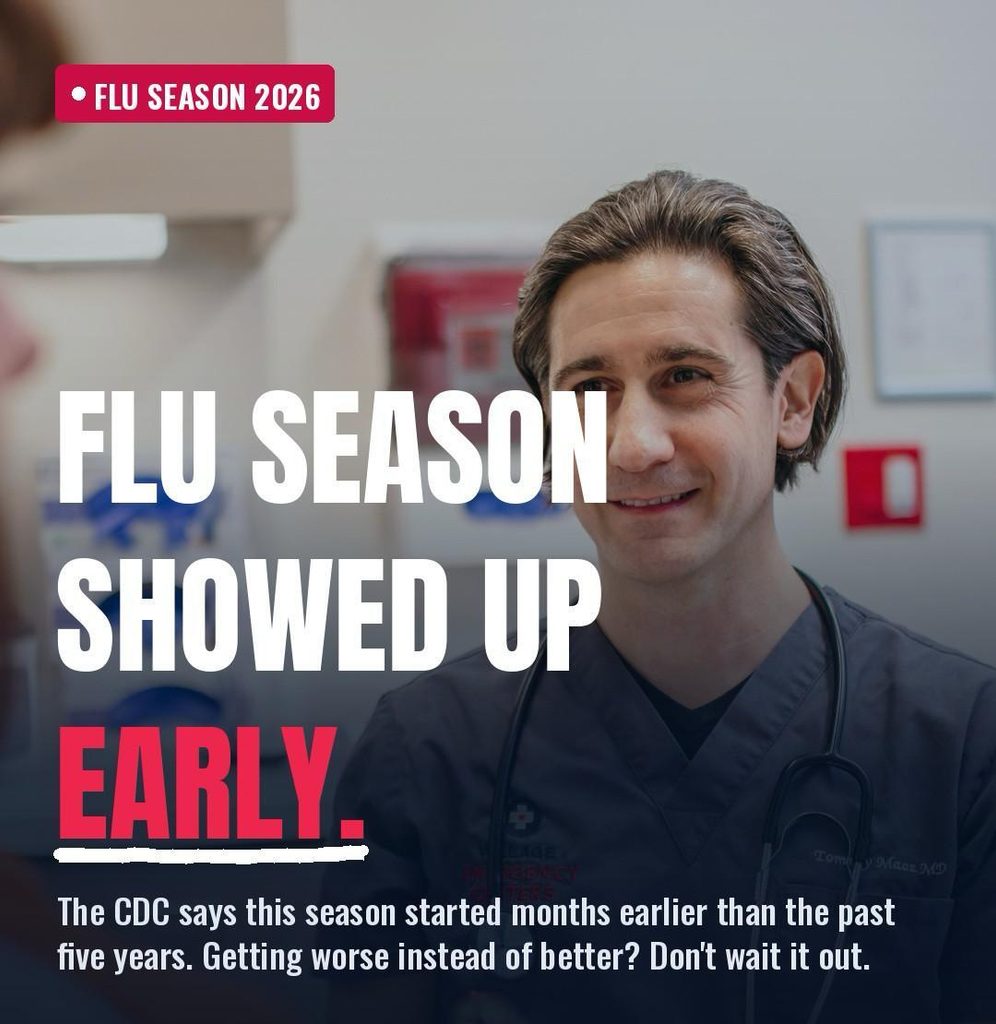
If it feels like everyone around you is sick already, you’re not imagining it. This year’s flu season got an early start. According to CDC data reported by Spectrum News, the season began months earlier than any of the past five years, and flu cases rose in all 50 states from late August into early September. Texas physicians are now watching for an early peak, possibly as soon as December.
That timing hits close to home. Houston-area infectious disease experts have pointed out that our region often sees flu arrive and peak earlier than the rest of the country, thanks to our size and how connected we are. Add in packed schools, holiday travel and close quarters, and it’s easy to see why so many families from Jersey Village to League City are feeling it right now.
Here’s what Houston families need to know: how to tell the flu from other upper respiratory infections, what you can safely handle at home, and the warning signs that mean it’s time to get seen.
Flu, Cold, COVID or Something Else?
Upper respiratory infections all share some of the same symptoms, which makes them easy to confuse. Some general differences:
- Common cold: usually comes on slowly with a runny or stuffy nose, sneezing and a sore throat. Fever is uncommon in adults.
- Flu: tends to hit fast. Common symptoms include fever, body aches, fatigue and a dry cough.
- COVID-19: can look a lot like the flu. Because the two share so many symptoms, testing is the most reliable way to know which one you have.
- Sinus infections and bronchitis: can follow a cold or the flu and may bring facial pressure, thick mucus or a cough that lingers for weeks.
Most Flu Can Be Handled at Home
For most healthy adults, the flu means a rough week of rest, fluids and over-the-counter symptom relief used as directed on the label. One thing many people don’t realize: fever reducers can make you feel better, but you can still be contagious for up to six days. Staying home while you’re sick is one of the best ways to protect coworkers, classmates and older family members.
Warning Signs That Mean It’s Time for the ER
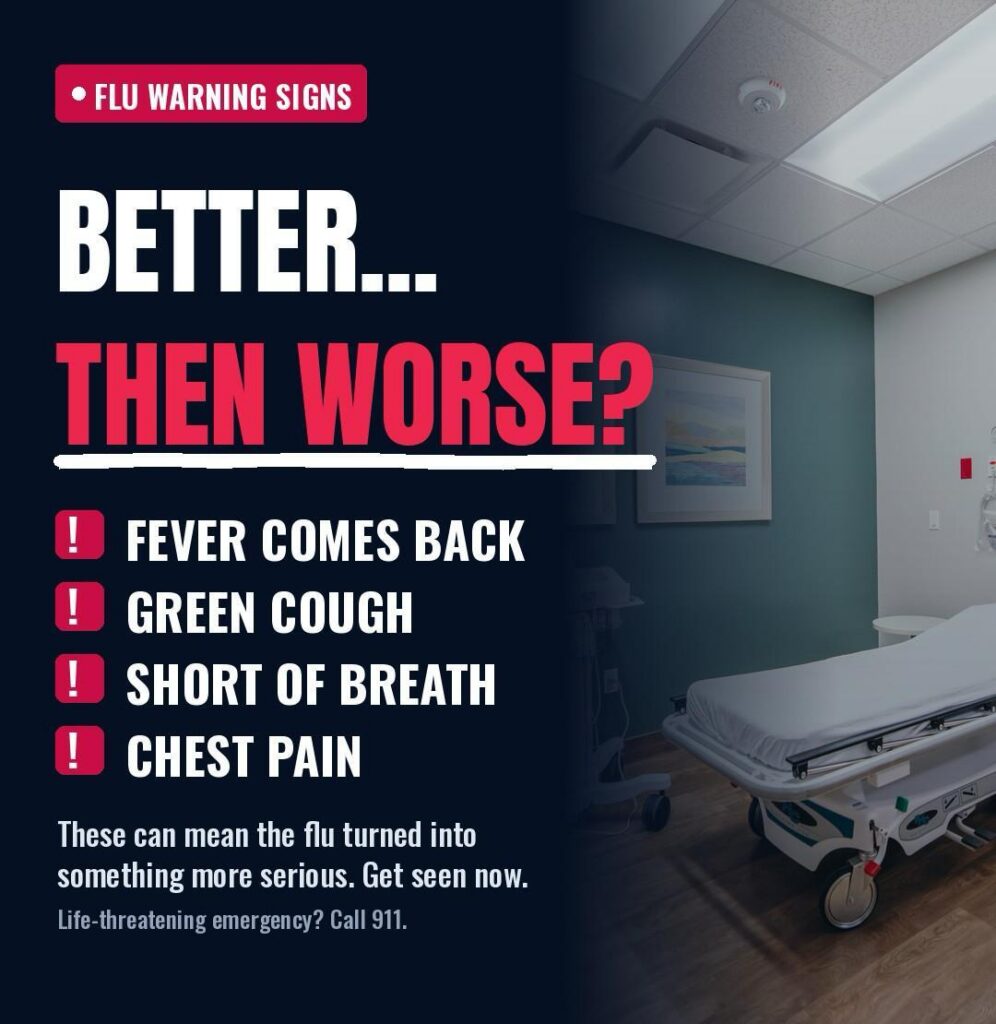
Some flu and respiratory symptoms should not be waited out. Get seen right away if you or a loved one has:
- Trouble breathing or shortness of breath
- Chest pain or pressure
- Confusion, severe dizziness or trouble staying awake
- A seizure
- Severe weakness or signs of dehydration, such as not urinating
- A chronic condition, like asthma, diabetes or heart disease, that is getting worse
- Getting better, then worse: a fever that comes back, a cough that turns green, or new trouble breathing
That last one is easy to miss. A Texas internal medicine physician told Spectrum News that patients who improve and then get worse may have a secondary bacterial infection on top of the flu, and that needs emergency care.
In children, also watch for: fast breathing or working hard to breathe, bluish lips or face, ribs pulling in with each breath, not drinking enough or fewer wet diapers, and being unusually hard to wake. Learn more about our pediatric emergency care.
If someone is having a life-threatening emergency, call 911.
Is It the Flu, or Is It Pneumonia?
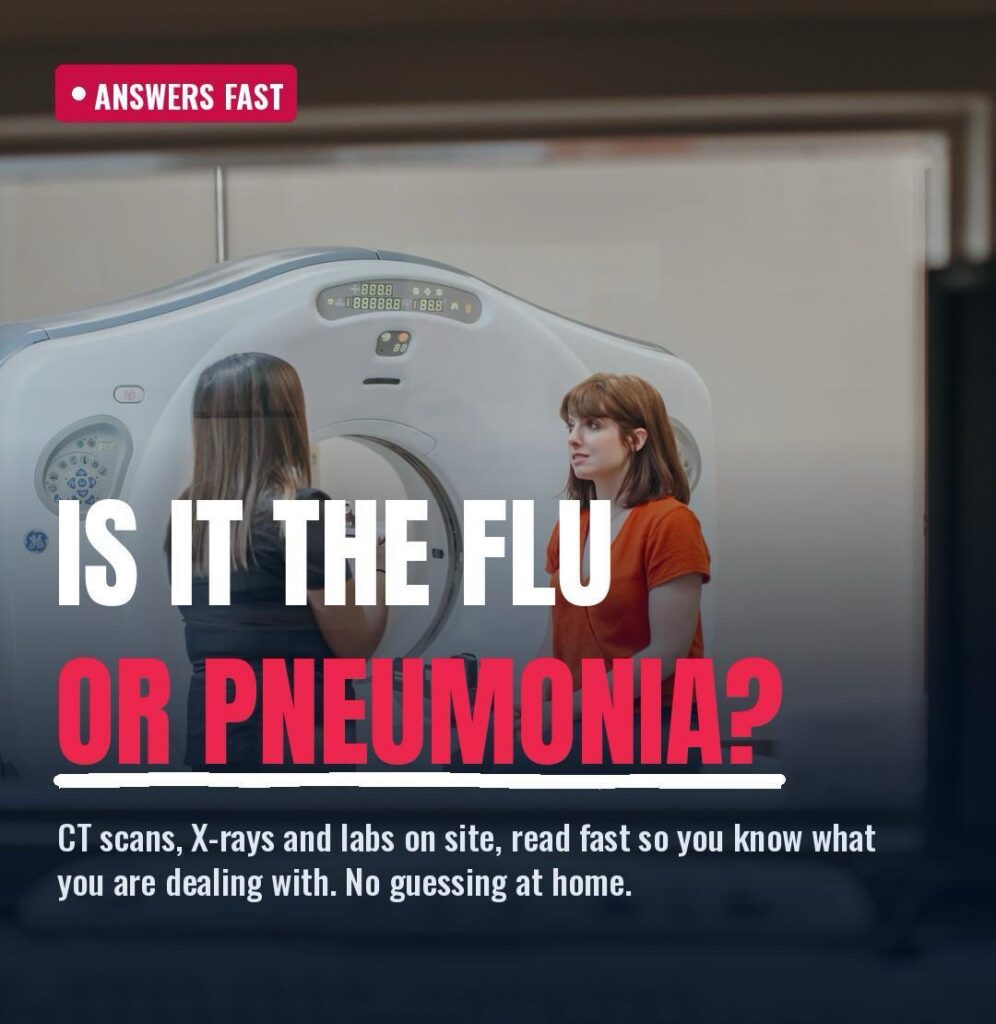
Pneumonia is one of the most common serious complications of the flu. When a cough won’t let up, breathing gets harder or a fever won’t break, you shouldn’t have to guess. Both Village Emergency Centers locations have CT, X-ray and ultrasound plus lab testing on site, so our emergency-trained physicians can find answers quickly and get you on a treatment plan before you leave. Learn more about how we treat pneumonia and other infections.
Who’s at Higher Risk for Flu Complications?
- Adults 65 and older
- Young children, especially under age 5
- People who are pregnant
- People with asthma, COPD, diabetes, heart disease or other chronic conditions
- People with weakened immune systems
If you or someone you care for is in one of these groups, don’t wait as long to get checked when symptoms start getting worse.
How to Protect Your Household This Season
- Get your flu shot. The same physician told Spectrum News that the flu shot can reduce your risk of getting the flu by up to 60%.
- Wash your hands often and cover coughs and sneezes.
- Stay home when you’re sick, and keep sick kids home from school.
- Consider at-home tests. Physicians recommend having at-home antigen tests for both flu and COVID on hand, since the symptoms overlap.
Two Houston-Area ERs, Open 24/7
When flu or a respiratory infection takes a turn, Village Emergency Centers is here day and night, with no appointment needed and emergency-trained physicians ready to help.
Clear Creek / League City
3725 E. League City Pkwy #150, League City, TX 77573
Save time with online check-in. Questions about coverage? Visit Insurance & Billing.
Flu Season Frequently Ask Questions
This article is for general information and is not a substitute for medical advice. If you think you are having a medical emergency, call 911 or go to the nearest emergency room.
Sources: Spectrum News 1, “Texas flu cases rise,” Oct. 22, 2026 · KPRC Click2Houston, “Flu still hitting Houston hard as season stretches into spring,” Mar. 3, 2026 · CDC: Flu Signs and Symptoms