
Halloween Fatalities: A Scary Statistic
Halloween is approaching so you’ve probably heard that the scariest thing out there is a haunted house that makes you sign a waiver to participate and promises twenty grand for the person that completes the trek, but it’s not. The deadliest Halloween event has been taking place every year for decades now. Car accidents kill more children during Halloween than any day of the year.
One hundred and fifteen child pedestrian fatalities occurred on Halloween from 1990 to 2010. That is an average of 5.5 Halloween fatalities each year, which is more than double the average number of 2.6 fatalities for other days of the year.
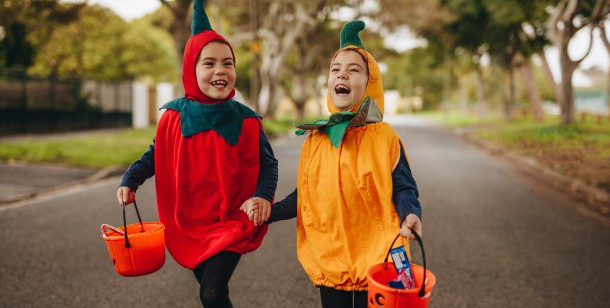
Halloween is the Deadliest Time of the Year
25% of accidents occurred from 6:00 – 7:00 p.m. More than half of the accidents occurred in the 4-hour period from 5:00 to 9:00 p.m. Many parents let their kids go out to trick or treat early in the evening believing that children are in more danger in the dark part of the day, but the truth is that children can be run over when the sun is still out due to the fact that this is a heavy traffic time, especially for cities like Houston where most people are getting off work at that time. People are tired, stressed, and in a hurry to get home. Texans are known for their aggressive driving, and they are not going to withhold just because it’s Halloween. Unfortunately, this leads to a lot of children being at risk of getting hit by a car. It’s important to teach children to look both ways, or better yet, go with your child and hold their hand while crossing streets.
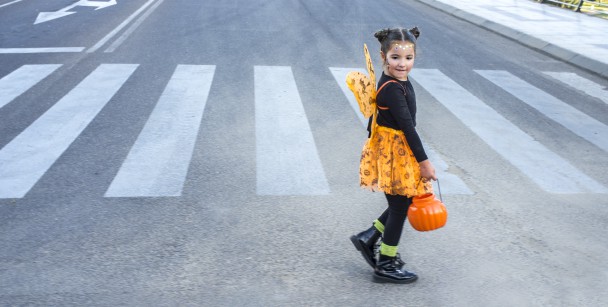
70% of the accidents occurred away from an intersection or crosswalk, meaning that cars are speeding through neighborhoods. If you think about it, you’ve seen people speed in neighborhoods regularly. Usually, you just shake your head thinking how irresponsible that is, but nothing else. You usually don’t think much about it because the only ones around are cars, but on Halloween, there are dozens of children, teens, and adults walking from house to house looking for candy. If you’re one of those that like to speed through a neighborhood thinking it’s empty, think again. Please try to be aware that you will not be the only one out that day.

Teenagers are likely to be out on Halloween on their own and wandering around carelessly which puts them at a 10% higher risk of being hit by a car than a child. It’s important to remind teens to be aware of their surroundings while having fun. On Halloween, everyone is dressed up, houses are decorated, so everything is not what it seems. Teens may also find themselves on the other side, as many teens drive. Teens are responsible for 30% of accidents involving children. If you have a teen driver, remind them that Halloween is a day where children are walking the streets. Don’t text and drive, get a safe ride home for those who may be drinking and avoid all distractions.
Don’t let another child be part of these unfortunate statistics. Take all of these safety measures into consideration when going out to trick or treat this Halloween. In case of a health emergency, call 911 immediately, or for non-life-threating emergencies visit us at one of our 4 Houston area locations nearby.